What is Subcontraction in Moving? What you actually need to know
MoveConnector Team
Relocation Expert
Quick Takeaways (TL;DR)
- The Definition: Subcontracting in the UAE moving industry means the company you signed a contract with utilizes third-party labor, trucks, or specialists to execute your relocation.
- Legality: It is entirely legal under UAE law to subcontract moving services, provided your specific contract does not explicitly prohibit it.
- Liability & Protection: The primary moving company you hired holds 100% of the legal and financial liability for any damages, missing items, or service failures.
- How to Verify: You can easily check if a move is subcontracted by cross-referencing the moving company's Trade License with the moving truck's Mulkiya (registration) and the packing crew's visa copies.
- The Direct Hiring Risk: Attempting to cut out the moving company to hire unvetted freelancers directly exposes you to severe security risks and leaves you with zero formal recourse if your property is damaged.
What is Subcontraction of Moving Services in the UAE?
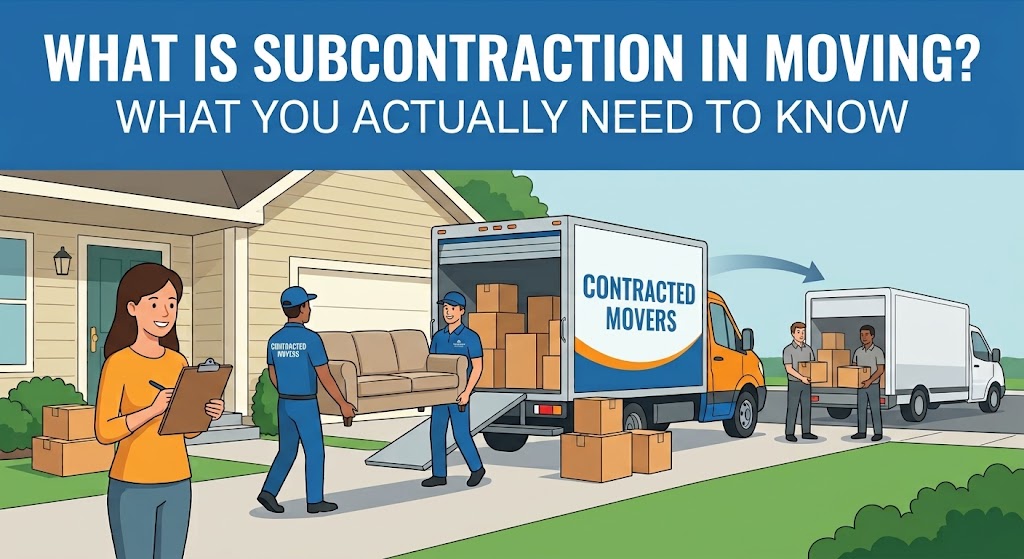
In the UAE, subcontraction of moving services occurs when you sign a moving agreement with one company, but behind the scenes, the actual physical labor, transport, and packing are performed by a third party.
The barrier to entry for the moving industry in the UAE is relatively low. Technically, a business only needs a valid trade license listing the relevant moving and transport activities to legally market themselves as a moving company. They are not required to actually own a fleet of moving trucks, operate a storage warehouse, or employ full-time packing professionals on their own company visas.
Because of this, subcontraction in the UAE generally falls into two categories:
- Moving Brokers: Many businesses operate entirely as brokers rather than traditional movers. They secure your booking and then assemble the necessary resources on demand. This often involves hiring freelance day laborers, renting unbranded white trucks, and using unbranded packing materials. Alternatively, they may outsource your entire move to an entirely different moving company at a lower cost, pocketing the profit margin.
- Asset-Owning Companies (Overflow Capacity): Legitimate moving companies that maintain their own trucks, warehouses, and full-time sponsored crews also occasionally rely on subcontractors. This typically happens during peak moving seasons or month-end rushes when their in-house resources are fully booked, forcing them to bring in temporary third-party help to handle the job overflow.
Is it Legal for Moving Companies in the UAE to Subcontract Your Move?
Yes, subcontracting moving services is entirely legal in the UAE. Under the UAE Civil Transactions Code, a company is permitted to subcontract part or the entirety of a service without needing prior permission, unless the contract you sign explicitly states that subcontracting is prohibited. As long as the physical move meets the obligations outlined in your agreement, using third-party labor or vehicles is legally permissible.
However, the legal protection for the consumer lies in liability. The moving company you sign the contract with carries 100% of the legal liability for the job. It is their sole responsibility to ensure that any subcontractor they hire has the necessary legal clearances, visas, and trade licenses to operate. In the event of damages, missing items, or service complaints, the main contractor remains fully liable for the subcontractor's performance. You do not have to chase the subcontracted crew for compensation; your legal recourse is exclusively with the company you hired.
Why do Moving Companies in the UAE Subcontract Moves?
For "no-asset" moving brokers, subcontraction is simply their entire business model. They sell a move at a premium price, negotiate a lower rate with a subcontractor to execute the job, and net the profit margin.
However, for actual asset-owning moving companies, subcontraction is done purely out of operational necessity to maintain a lean business model. This usually happens for a few specific reasons:
- Overbooking and Surges: Even a small residential move requires a minimum crew of 2 to 3 professional packers. If a moving company books 15 jobs during the notorious month-end surge, they would need over 45 packers on shift that day. Keeping 45+ packers on a full-time, year-round payroll is a massive overhead, especially because there are slower mid-month days where they might not have a single job. Subcontracting allows them to handle overflow without going bankrupt on salaries.
- Lack of Specialized In-House Resources: A company may have excellent packers and drivers, but they might lack a specific technical skill required for your move. It is highly common for moving companies to subcontract specialized handyman services (like complex carpentry, electrical fixtures, or plumbing disconnections) to third-party experts rather than keeping those specialists on the daily payroll.
How Do I Know if My Move is Subcontracted?
The simplest approach is to ask the moving company directly before booking. Most reputable movers will be honest about their capacity and if they need to utilize third-party resources.
If you want to verify independently, you can request three key documents prior to the moving day:
- The company's Trade License.
- The Visa copies of the packing crew scheduled for your move.
- The Mulkiya (Vehicle Registration) of the moving truck.
Cross-reference these documents. If the company name on the crew's visas and the truck's Mulkiya matches the name on the Trade License and your contract, your move is being handled in-house. If the names are different, your move is very likely being subcontracted.
You do not even need to make this an awkward request. You can easily ask for these documents under the pretext of arranging your move-in and move-out permits with your building management or community developer, as these documents are strictly required for security gate passes anyway.
Finally, do not panic if you discover your move is subcontracted! As mentioned earlier, even the best companies do this during peak times, and it does not automatically guarantee there will be quality issues.
Is the Quality Worse When a Move is Subcontracted?
Not necessarily. The quality of a subcontracted move depends entirely on the strictness of the vetting and quality control processes maintained by the primary moving company you hired.
Most established, reputable moving companies manage subcontraction through strict Service Level Agreements (SLAs) with their third-party partners. Because the primary company remains legally bound by the contract you signed, it is their reputation and financial liability on the line if something goes wrong. Under Federal Decree Law No. 5 of 2023 on Consumer Protection, UAE residents possess the right to fair compensation for damages resulting from inadequate or unprofessional services. Knowing this, larger moving companies deploy stringent quality control measures to ensure any subcontractor they utilize meets their internal standards before stepping foot in your home.
Can I Refuse a Move if the Moving Company is Subcontracting?
Absolutely. However, you must do this before signing the contract.
When you commit to a moving date and sign an agreement, the moving company reserves those specific calendar dates for your relocation. If you wait until moving day to refuse the service just because an unauthorized subcontracted crew shows up, you will almost certainly be hit with heavy cancellation fees. Even if the crew is outsourced, the moving company has still incurred actual daily costs to send four men, a truck, and fuel to your residence.
The best way to protect yourself is to do your due diligence during the quoting phase. Ask the hard questions about their capacity and their subcontraction policy. If you do not like their answers, reject the proposal before putting your signature on any legally binding document.
Doesn't it Make More Sense to Go Directly to the Source for a Cheaper Rate?
It might seem logical to cut out the middleman, but going directly to freelancers is rarely a good idea.
First, you likely will not get the steep discount you expect. Moving companies negotiate aggressively with their subcontractors and leverage volume commitments to drive down costs. A freelancer is not going to offer a one-off consumer the same wholesale rate they give a company that feeds them 30 jobs a month.
More importantly, going direct exposes you to a wide array of severe risks:
- Zero Vetting & Security: Freelancers are largely unvetted. You have no idea who you are inviting into your home to handle your most valuable possessions.
- Time & Coordination Loss: You essentially become the project manager. You will lose significant time trying to coordinate schedules, logistics, and labor yourself.
- No Escalation Matrix: If a moving company's subcontractor damages a wall or breaks a TV, the primary moving company has a streamlined conflict resolution and problem escalation matrix in place to handle it. If a freelancer breaks something, they can simply stop answering your calls.
While a direct freelancer might quote you a price a couple of hundred dirhams cheaper upfront, the lack of coordination and massive liability risks completely outweigh the savings. It is a false economy that could end up costing you substantially more in the long run.
Conclusion
Subcontraction is a standard, hidden reality of the UAE moving industry. While it serves a necessary logistical purpose for peak season overflows and specialized services, it requires transparency to protect the consumer.
By understanding the difference between a moving broker and an asset-owning company, demanding documentation like Trade Licenses and Mulkiyas, and ensuring accountability remains strictly with the company you hired, you can protect your household. Never rush for the absolute cheapest option, and always ensure the company you sign with has the professional infrastructure to manage your relocation safely whether they use their own crew or a trusted partner.