Server Room Relocation in Dubai Silicon Oasis: De-racking & Downtime Protocols (2025 Guide)
MoveConnector Team
Relocation Expert
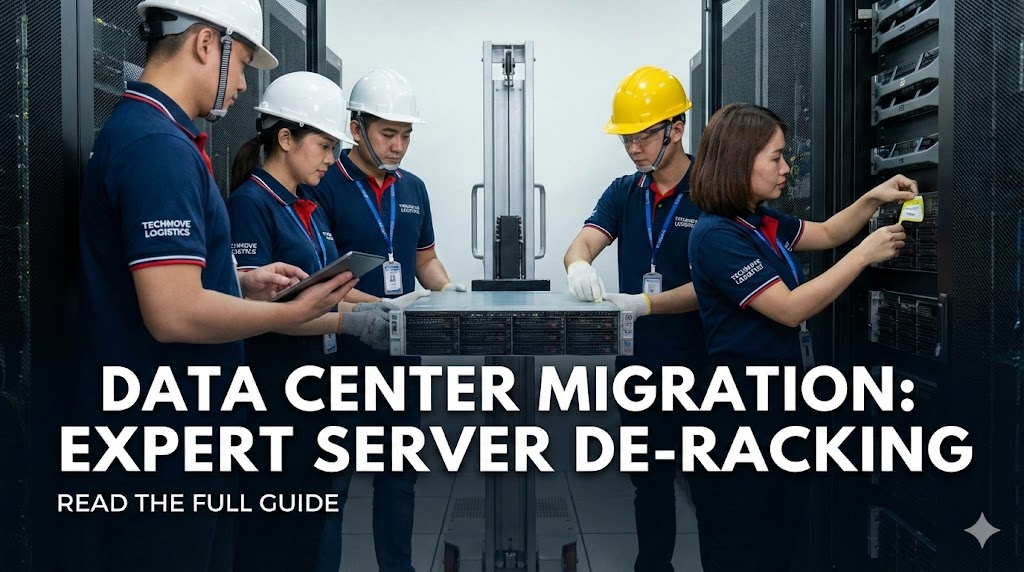
Introduction: A Strategic IT Project Disguised as a Move
For a tech company in Dubai Silicon Oasis (DSO), an office relocation is not a simple logistical task; it is a mission-critical IT project where the stakes are measured in uptime, data integrity, and revenue. While the office furniture can be handled by standard movers, your server room—the very brain of your company—demands a level of specialized expertise that is worlds apart.
The cost of getting it wrong is catastrophic. Industry data shows that for a typical tech firm, just one hour of unplanned server downtime can result in losses exceeding AED 10,000 in productivity, customer disruption, and potential data loss. Using a standard "man with a van" to move a server rack is not a cost-saving measure; it's an act of corporate negligence. This guide, written from the perspective of an IT logistics consultant, is not about moving furniture. It's about risk mitigation. It provides the technical protocols for de-racking, packing, and transporting your most valuable assets in Dubai's extreme climate, and details how to select a specialist vendor who understands that you're not moving hardware—you're moving the core of your business.
Key Migration Data
- Cost of Server Rack Relocation (Dubai): Professional server relocation typically costs AED 2,500 - AED 5,000 per rack (excluding insurance), based on the complexity of de-racking and cable management.
- Standard Downtime Protocol: A planned "Lift and Shift" protocol over a weekend should limit critical system downtime to 12-24 hours.
- Insurance Requirement: Standard moving insurance is worthless. You must secure "All-Risk IT Equipment Insurance" to cover the full replacement value of hardware and associated data recovery liability. Learn more in our complete guide to moving insurance.
The Technical Protocol: De-Racking, ESD Protection, and Transport
Moving a server rack requires a process that is more akin to a surgical procedure than a furniture move.
1. The Pre-Move Audit & "Patch Map"
Before a single cable is unplugged, a specialist team must conduct a full audit.
- The Patch Map: Every single cable—power, network, KVM—must be meticulously labeled at both ends. A corresponding "patch map" diagram is created to ensure a one-to-one perfect reconnection at the new site. This single step prevents days of troubleshooting post-move.
- The Audit: The team will document rack elevations, PDU power configurations, and airflow requirements.
2. The "Bubble Wrap Kills Servers" Rule: ESD Protection
CRITICAL: Standard bubble wrap generates significant electrostatic discharge (ESD), which can instantly fry sensitive micro-circuitry.
- The Solution: All servers, switches, and components must be placed in anti-static bags (the pink-tinted bubble wrap) and then transported in specialized, ESD-safe hard cases or conductive bins. A mover who shows up with standard clear bubble wrap should be turned away immediately.
3. Why You Must De-Rack Your Servers
This is a non-negotiable best practice. Some movers may suggest moving a rack fully loaded to save time. This is a recipe for disaster.
- The Physics: A server rack is designed to be stationary. The rails are not built to withstand the intense vibrations and lateral forces of road transport. Moving a loaded rack can cause the rails to bend, putting extreme stress on the server chassis and, critically, the motherboard.
- The Result: Micro-cracks on the motherboard are a common result, leading to intermittent, impossible-to-diagnose failures weeks or months after your move. Always insist on de-racking.
The Dubai Climate Challenge: Your Server's Biggest Enemy
The environmental shift during a Dubai move is extreme and poses a direct threat to your hardware.
- The Problem: Thermal Shock & Condensation: Your servers operate in a highly-controlled 18-20°C environment. Moving them out of your building onto a 45°C loading dock causes rapid temperature changes. This can lead to condensation forming directly on the motherboards and internal components, a guaranteed cause of short-circuits upon power-up.
- The Solution: Climate-Controlled, Air-Ride Suspension Trucks: This is mandatory.
- Climate Control: A "chiller van" maintains a stable temperature, preventing thermal shock and condensation.
- Air-Ride Suspension: Standard truck suspension is harsh and transfers road vibrations directly to your equipment. Air-ride suspension provides a much smoother ride, protecting sensitive hard drives and internal components from shock damage.
The Downtime Minimization Strategy: A Weekend Move Protocol
A professional IT relocation is planned with surgical precision to minimize downtime. Here is a standard "lift and shift" timeline for a move within DSO.
- Friday, 6:00 PM: Business operations cease. Final data backups are initiated and verified.
- Friday, 8:00 PM - 12:00 AM: The specialist IT moving team begins the systematic shutdown, labeling, and de-racking process.
- Saturday, 9:00 AM: Packed servers and equipment are transported in a climate-controlled truck to the new DSO office.
- Saturday, 11:00 AM - 8:00 PM: The team begins re-racking, cabling (following the patch map), and connecting power distribution units (PDUs).
- Sunday, 9:00 AM - 12:00 PM: Systems are powered on in a phased sequence. Your IT team works with the movers to test network connectivity and core application functionality.
- Sunday, 1:00 PM: Systems are declared fully operational, ready for staff arrival on Monday morning.
Vendor Selection: Office Mover vs. IT Logistics Specialist
A common, costly mistake is assuming your general office mover can handle the server room. They cannot. Choosing an unqualified vendor is one of the biggest dangers of hiring cheap movers.
| Feature | Standard Office Mover | IT Logistics Specialist |
|---|---|---|
| Expertise | Furniture, boxes, general equipment. | Server racks, network hardware, data integrity. |
| Packing Materials | Standard bubble wrap, blankets. | Anti-static bags, ESD-safe cases. |
| Trucks | Standard box truck. | Climate-controlled, air-ride suspension. |
| Insurance | Basic liability (by weight). | Specialized IT Equipment & Data Liability. |
| Team | General packers and laborers. | Trained IT technicians, cable managers. |
The MoveConnector Advantage: Vetting for Technical Excellence
Finding a true IT logistics specialist can be difficult. MoveConnector simplifies this by pre-vetting our partners for their technical capabilities. When you specify a server room relocation on our platform, your request is only sent to movers who have demonstrated:
- A dedicated, trained IT relocation team.
- Access to climate-controlled, air-ride vehicles.
- The correct anti-static packing materials and equipment.
- The appropriate level of specialized insurance coverage.
This ensures you are comparing quotes from genuine specialists, not generalists pretending to have the skill.
FAQ: Your Technical Server Relocation Questions
Q: Can we move the UPS batteries while they are connected? A: Absolutely not. Uninterruptible Power Supply (UPS) batteries are heavy and often classified as hazardous materials for transport. They must be properly disconnected, and their transport must follow specific safety protocols.
Q: How to move server racks without de-racking? A: While it is highly risky and not recommended, for very short-distance moves within the same building or across a campus, specialized "server lift" hydraulic jacks can be used to lift and move a fully populated rack onto a low-bed, air-ride truck. This requires a detailed risk assessment and is a premium service. For a move between buildings in DSO, de-racking is the safer and standard professional protocol.
Q: What about our data security during the move? A: A professional IT mover has clear security protocols. This can include using lockable, tamper-evident cases, GPS tracking on the vehicle, and ensuring a clear chain of custody from your old server room to the new one.
Q: Does our company's insurance cover the servers during the move? A: Unlikely. Most corporate property insurance policies exclude items while in transit by a third party. You must ensure your moving partner has a specific "All-Risk IT Equipment" insurance policy that covers the full replacement value of your hardware.
Conclusion: An Investment in Business Continuity
Your server room is the brain of your operation. Moving it is a complex technical project where the cost of failure far outweighs the cost of hiring a specialist. By partnering with a professional IT logistics provider, you are not just moving equipment; you are investing in a seamless transition, minimizing downtime, and ensuring the absolute security and integrity of your company's most critical assets. For a broader overview, see our guide to seamless office relocation.
Ready to plan your IT relocation with a team that speaks your language?